
Hydration and training: what you need to know
4 min read
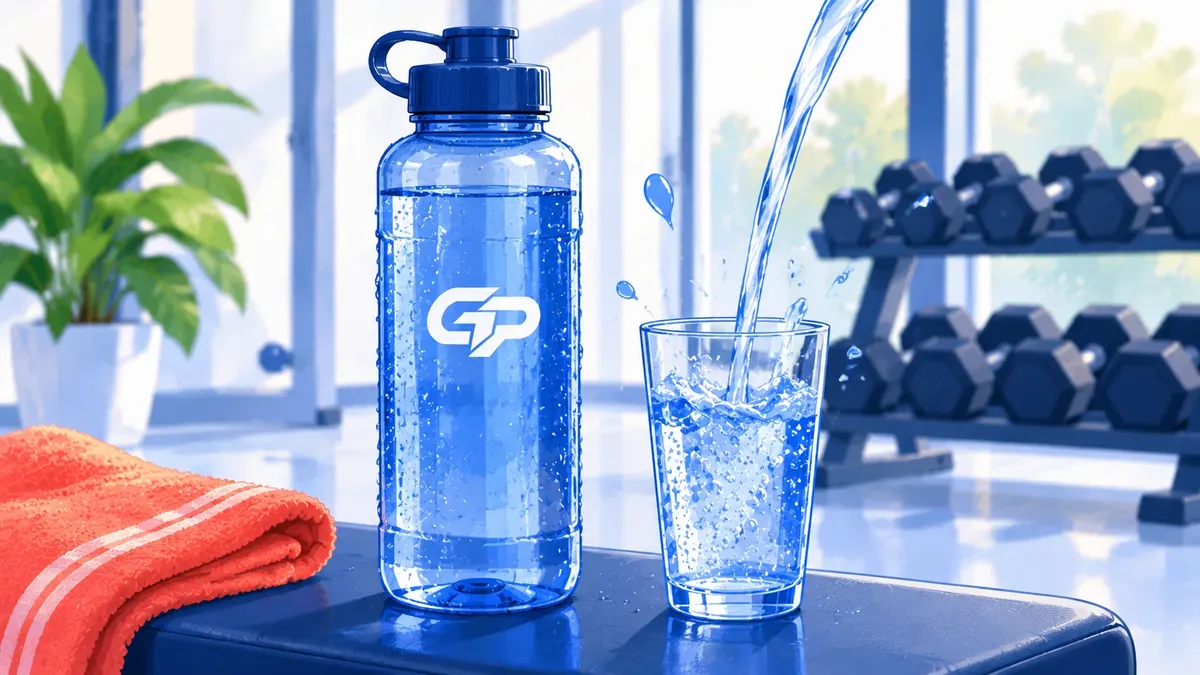
We talk a lot about protein and calories, rarely about hydration — yet water directly influences performance, strength and recovery. Even mild dehydration lowers your capacity. Here is the essential to hydrate well around your sessions.
In this guideexpand_more
Why water matters for muscle
Muscle is about 75% water. Good hydration supports strength, endurance and focus; conversely, mild dehydration reduces performance and brings on early fatigue. Water also aids nutrient transport and recovery, helping deliver the amino acids and glucose your muscles need after a session and flushing out metabolic waste produced during effort.
Staying well hydrated is thus one of the simplest — and most neglected — levers for training better. It costs nothing and makes a real difference to session quality.
How much to drink and when
A simple guide: drink regularly throughout the day rather than all at once. Thirst and urine color (clear = well hydrated) are good indicators. Around training, drink a little before, during, and after to offset sweat losses.
During long sessions or in hot weather, needs rise noticeably. A water bottle within reach during the session is enough to maintain proper hydration without thinking about it too much.
Spotting dehydration
Do not wait for thirst to drink: it often appears when dehydration has already set in. The first signs to watch are early fatigue, a drop in strength or focus, headaches, cramps, and dark urine. During a session, feeling 'flat' for no reason is often just a lack of water.
Urine color remains the simplest daily gauge: clear to pale yellow, you are well hydrated; dark, it is time to drink. A quick check several times a day keeps dehydration from setting in.
Coffee, tea and electrolytes
Good news: coffee and tea count toward your hydration. Their 'diuretic' effect is minor at usual doses and does not dry you out. Water-rich foods (fruit, vegetables, soups) also contribute to your intake, often more than people think.
Electrolytes (mainly sodium) only become useful during very long efforts or in hot weather, when you sweat heavily. For a typical weight session, water is plenty: no need to pile on sugary or 'sports' drinks.
Can you drink too much? Hyponatremia
Drinking too much water, too fast, dilutes blood sodium and can cause hyponatremia (abnormally low sodium levels) — a rare but real phenomenon, mostly documented in marathon runners drinking several liters without electrolytes. For a typical weight trainer, this risk stays extremely low: you would need to drink very excessive amounts in a very short time.
The guide remains simple: drink according to thirst and urine color, without forcing yourself to gulp huge volumes 'just to be safe'. During very long endurance efforts (several hours), consider adding some sodium (an electrolyte drink, a salty food) rather than large amounts of plain water.
Hydration and muscle cramps
Cramps during or after exercise are often blamed solely on dehydration, but their real causes are varied: muscle fatigue, insufficient warm-up, an electrolyte imbalance (sodium, potassium, magnesium), or simply a muscle pushed beyond its current capacity.
Good overall hydration remains useful to limit the risk, but it is not always enough on its own if you are prone to regular cramps. In that case, also check your warm-up, your load progression (not too fast) and your overall electrolyte intake through food, before blaming the lack of water alone.
Frequently asked questions
Is bottled water better than tap water for hydration?expand_more
For hydration, both are largely equivalent: what matters is the volume of water you drink, not its source. Tap water, in most developed countries, meets strict quality standards and remains a perfectly healthy, economical and eco-friendly choice. Bottled water may have a taste or convenience appeal, but offers no demonstrated advantage for performance or recovery.
Does dehydration really affect strength and performance?expand_more
Yes, several studies show that even mild dehydration (around 2% of body weight) reduces strength, muscular endurance and focus, while raising perceived effort. In other words, the same session feels harder and you lift a bit less if you are poorly hydrated, often without even noticing it at the time.
Should you drink during weight training?expand_more
Yes, sipping between sets helps maintain performance, especially in long or intense sessions. Keep a bottle nearby: no need to drink large amounts at once, regular sips are enough.
Are sports drinks useful?expand_more
For a typical weight session, water is plenty. Drinks rich in electrolytes or sugars are only useful for very long efforts or in hot weather with heavy sweating. Most often, they mainly add unnecessary calories.
How much water per day when you train?expand_more
There is no universal figure: needs depend on your size, the heat and how much you sweat. Many active people land around 2 to 3 litres a day, including drinks and water-rich foods. The simplest approach is to rely on thirst and pale urine color rather than chasing an exact number, since forcing a fixed target regardless of your actual thirst can just as easily lead to drinking too little or too much.
Can you drink too much water in one session?expand_more
It is very rare for a typical weight session: the risk of hyponatremia mainly concerns very long endurance efforts with extreme water volumes, drunk in a short window without any electrolytes. Trust your thirst and drink in small, regular sips, without forcing huge amounts just because a rule of thumb says so — your body regulates this far better than a rigid target.
Is water alone enough to avoid cramps?expand_more
Not always: cramps have several possible causes (fatigue, insufficient warm-up, electrolytes, a load progressing too fast). Good hydration helps, but if cramps persist despite it, also check your warm-up and your load progression.
Sources
infoThis content is provided for informational purposes and does not replace the advice of a healthcare professional or dietitian. If you have a specific medical condition, seek advice before changing your diet.
Put this guide into practice
Generate a program matched to your level, log your workouts and track your progress — for free.