
Losing belly fat: what actually works
6 min read
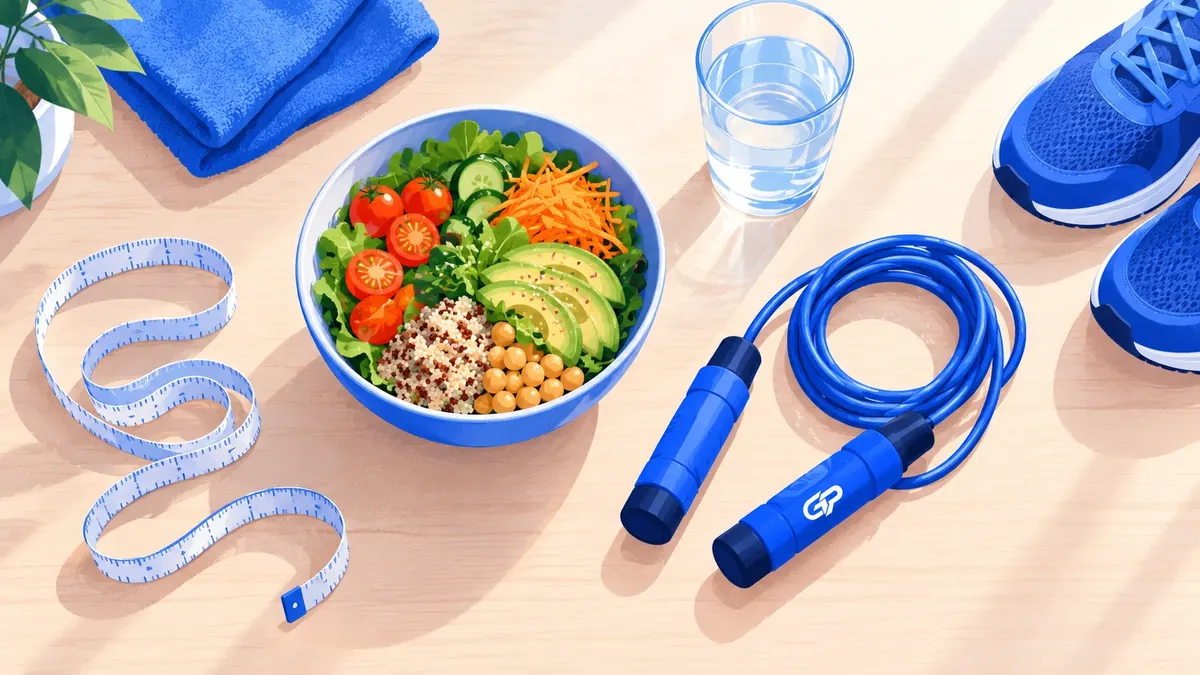
Losing belly fat is one of the most sought-after — and most misunderstood — goals. People picture endless ab sets or miracle products. The reality is simpler and more demanding: belly fat is lost like the rest, through a calorie deficit and patience. Here is the real method.
In this guideexpand_more
Spot fat reduction does not exist
This is the most important point: you cannot target the fat of a specific area with exercises. Doing hundreds of ab reps strengthens the muscles under the fat, but does not specifically burn belly fat. The body draws on its reserves globally, according to its own genetics.
The belly is often the first area where fat settles and the last to leave. This requires consistency: belly fat eventually decreases as overall body fat drops.
The number-one lever: nutrition
Fat loss is decided first on the plate. A moderate, sustainable calorie deficit — eating a little less than you burn — is the only reliable path. Favor filling, protein-rich foods, which help hold the deficit without excessive hunger.
There is no need to follow an extreme diet: harsh deprivation almost always fails long-term. A reasonable reduction, held over several months, gives far more solid and lasting results.
The role of training and activity
Strength training preserves — even builds — muscle during weight loss, keeping the body firm rather than 'soft'. It also raises your energy expenditure and sculpts the shape that will appear under the fat.
Add daily activity: walk more, move more often. These small cumulative expenditures often weigh more than exhausting cardio sessions, and are far easier to sustain.
Sleep, stress and a realistic pace
Two underrated factors slow fat loss: lack of sleep and chronic stress, which increase appetite and make the deficit harder to hold. Sleeping enough and managing stress do not 'burn' fat directly, but they make sticking to the deficit far easier day to day.
Finally, be realistic about the pace. Aiming for about 0.5 to 1% of your bodyweight per week preserves muscle and stays sustainable. Very fast losses often come with muscle wasting and a yo-yo effect. Since the belly is the last area to slim, patience is your best ally here.
Tracking progress beyond the scale
The number on the scale swings by one to two kilos every day depending on hydration, sodium eaten the day before, hormonal cycle or digestion — nothing to do with a real change in body fat. Weighing yourself daily and panicking at the slightest uptick leads to pointless decisions, like cutting calories further when the underlying trend is actually fine.
Instead, weigh yourself at the same time, under the same conditions, and look at the seven-to-fourteen-day average rather than a single morning reading. Add a tape measure: waist circumference, taken at navel level, often tells you more about belly fat than total weight, especially if you are also strength training and gaining some muscle while losing fat.
Round it out with a monthly photo, always in the same spot and lighting. The daily mirror often lies — bloating, light, angle — while a month-to-month comparison reveals changes the eye misses day to day.
Fiber, hydration and satiety: underrated allies
Sticking to a calorie deficit over time depends mostly on how hungry you actually feel, not just the theoretical number. Fiber — vegetables, whole fruit, legumes, whole grains — slows digestion and extends satiety for very few calories, which makes the deficit far easier to sustain without snacking.
Drink enough water: thirst is often mistaken for hunger, and a simple glass of water before a meal helps regulate portions better. A soup or salad as a starter, rich in water and fiber, fills the stomach before the more calorie-dense main course arrives.
Finally, chew slowly and eat without distraction (screen, phone): the brain takes about twenty minutes to register fullness, and eating fast often pushes you past that point without even noticing.
Work out your needs
Frequently asked questions
Does intermittent fasting help lose belly fat?expand_more
Intermittent fasting has nothing magical about it by itself: it only works if it helps you create a calorie deficit, for example by naturally reducing the number of eating occasions. Some people find it easier to stick to, others get hungrier and end up overeating in the remaining window. Pick the eating pattern that lets you hold your deficit over time, not the one that promises the most.
Should you avoid carbs at night to lose belly fat?expand_more
No, the time of day you eat carbs has only a minor effect on fat loss compared to your total calories for the day. What matters is the 24-hour balance, not the hourly distribution. Some people even sleep better with a bit of carbs in the evening, which indirectly makes it easier to stick to the deficit the next day.
Does alcohol stop you from losing belly fat?expand_more
Alcohol slows fat loss on several fronts: it brings empty calories, reduces fat oxidation while it is being metabolized, lowers appetite control and degrades sleep quality — one of the factors already mentioned above. Occasional drinking counted within your calorie budget stays compatible with fat loss; regular, uncounted drinking quietly sabotages it.
Do belly belts and “fat-melting” devices work?expand_more
No. No belt, cream or device melts fat locally: it is a marketing myth. The only method that works is an overall calorie deficit combined with activity. Be wary of any promise of targeted, effortless loss.
Why won’t my belly go despite exercising?expand_more
Most often because nutrition does not create a real deficit: it is easy to 'eat back' the calories burned in training. Check your intake, be patient, and remember the belly is often the last area to slim down.
Do ab exercises reveal a six-pack?expand_more
Ab exercises build and strengthen the muscles, but a 'six-pack' only appears once the fat layer covering it is thin enough. So it is the calorie deficit, not the number of ab reps, that makes the abs visible. The two are complementary.
Sources
infoThis content is informational and does not replace the advice of a doctor, dietitian or other healthcare professional. If you have a medical condition, are pregnant, are on treatment or are unsure, seek advice before changing your diet or training.
Put this guide into practice
Generate a program matched to your level, log your workouts and track your progress — for free.