
How to eat enough protein every day
6 min read
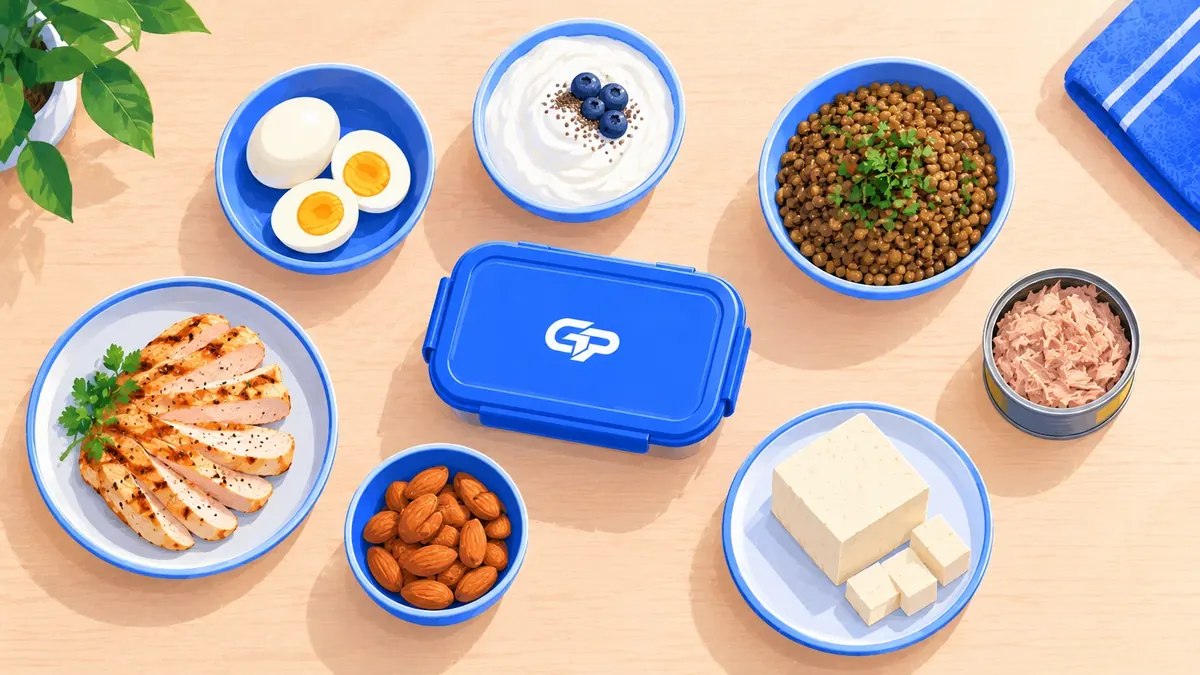
Protein is the priority nutrient when you train, but many struggle to eat enough. The good news: with a few simple habits, hitting your target becomes natural. Here is how to do it without turning every meal into a complicated calculation.
In this guideexpand_more
How much do you need?
To build or preserve muscle, aim for about 1.6 to 2.2 g of protein per kilo of body weight per day. For a 75 kg person, that is roughly 120 to 165 g daily. Our protein calculator gives you your precise range.
This figure may seem high at first, but it quickly becomes achievable once you structure your meals around a protein source at every serving.
The best sources
Prioritize rich, minimally processed sources: lean meats (chicken, turkey, beef), fish, eggs, dairy (cottage cheese, skyr, Greek yogurt), and on the plant side legumes, tofu, tempeh and seitan. Each provides good amounts for few calories.
Vary your sources to cover all amino acids, especially if you eat little or no animal products. Whey or plant protein powder remains a convenient backup, not a requirement.
The tricks that make it easy
Put a protein source at every meal and snack: that is the golden rule. Prepare in advance (batch cooking) chicken, hard-boiled eggs or legumes so you are never caught out. Keep quick options on hand: cottage cheese, tuna, skyr.
Spread intake across the day (3 to 5 servings of 20 to 40 g) rather than concentrating it in one meal. This regularity maximizes protein use by the muscle and eases digestion.
Protein without breaking the bank
Eating enough protein does not have to be expensive. Eggs, dairy (cottage cheese, skyr, milk), legumes paired with a grain (rice + lentils), canned tuna or sardines, and the cheaper cuts of poultry all offer an excellent protein-to-price ratio.
Think in terms of price per 100 g of protein rather than product weight: eggs and legumes usually win. Buying in bulk and cooking ahead cuts the bill further while ensuring you always have a source on hand.
Protein at breakfast: the most commonly neglected meal
For most people, breakfast is the meal lowest in protein: toast, sugary cereal or pastries provide very little. Yet it is an easy moment to fix, and it weighs heavily on the daily total, since it is rarely made up for later in the day without actively thinking about it.
Eggs (scrambled, as an omelet, or hard-boiled ahead of time), cottage cheese or skyr with fruit, or leftover meat or fish from the day before turn this meal into a real protein source. For rushed mornings, a whey shake with milk remains a quick, reliable option that takes under a minute to prepare.
Aiming for 25 to 35 g of protein first thing in the morning makes hitting the daily total much easier and extends satiety until lunch, which also helps avoid mid-morning snacking on whatever happens to be within reach at the office.
Eating out or on the go without derailing
Meals eaten away from home (restaurants, cafeterias, travel) are often when protein intake drops, for lack of options or control over preparation. A simple habit: prioritize ordering a clear protein source (meat, fish, eggs, tofu) and add vegetables, rather than being guided purely by the moment's craving.
At fast-food places or cafeterias, 'double protein' versions or composed bowls (poke bowl, rice bowl with chicken) generally offer a far better protein-to-calorie ratio than classic burgers or pasta in sauce. Also keep backup options on you while traveling: protein bars, tuna pouches, individually portioned cheese.
The goal is not perfection at every meal out, but avoiding these occasions systematically turning into protein-free days — a few good habits are enough to hold your weekly total, even with a packed schedule.
Work out your needs
Frequently asked questions
Are plant proteins as effective as animal proteins?expand_more
Yes, provided you vary your sources and eat a slightly higher total quantity, since plant proteins are often less concentrated and individually less complete in essential amino acids. Combining legumes and grains (rice + lentils, for example) rebuilds a complete profile equivalent to animal sources, and it does not need to happen within the same meal to still work.
Do you need whey to hit your target?expand_more
No, whey is just one convenient tool among others, not a necessity. It is useful when food alone cannot cover the target (busy schedule, low appetite) or as a quick fix after training, but a well-structured diet with whole foods can cover all needs without any supplement.
How soon after training should you eat protein?expand_more
The famous 30-minute 'anabolic window' is largely overstated: what really matters is your total protein intake for the day. Eating within two to three hours after training remains a sound, reasonable practice, but missing that window by a few hours does not cancel the benefits of your session as long as your daily total is met.
Can you eat too much protein?expand_more
For someone with healthy kidneys, a high intake is not dangerous, but beyond about 2.2 g/kg the extra benefit is negligible. Those calories would be better allocated elsewhere. So there is no need to aim for extreme amounts.
How to hit your target as a vegetarian?expand_more
It is entirely possible by combining legumes, tofu, tempeh, seitan, eggs and dairy, optionally topped up with plant protein powder. Vary sources for a complete amino-acid profile and watch quantities, often a little less concentrated than animal sources.
Do you need protein at every meal?expand_more
It is ideal: spreading intake across 3 to 5 servings of 20 to 40 g optimizes protein use by the muscle over the day. But the decisive factor remains the daily total: hitting your overall amount matters more than perfect distribution.
Sources
infoThis content is provided for informational purposes and does not replace the advice of a healthcare professional or dietitian. If you have a specific medical condition, seek advice before changing your diet.
Put this guide into practice
Generate a program matched to your level, log your workouts and track your progress — for free.