
Meal ideas for a lean bulk
5 min read
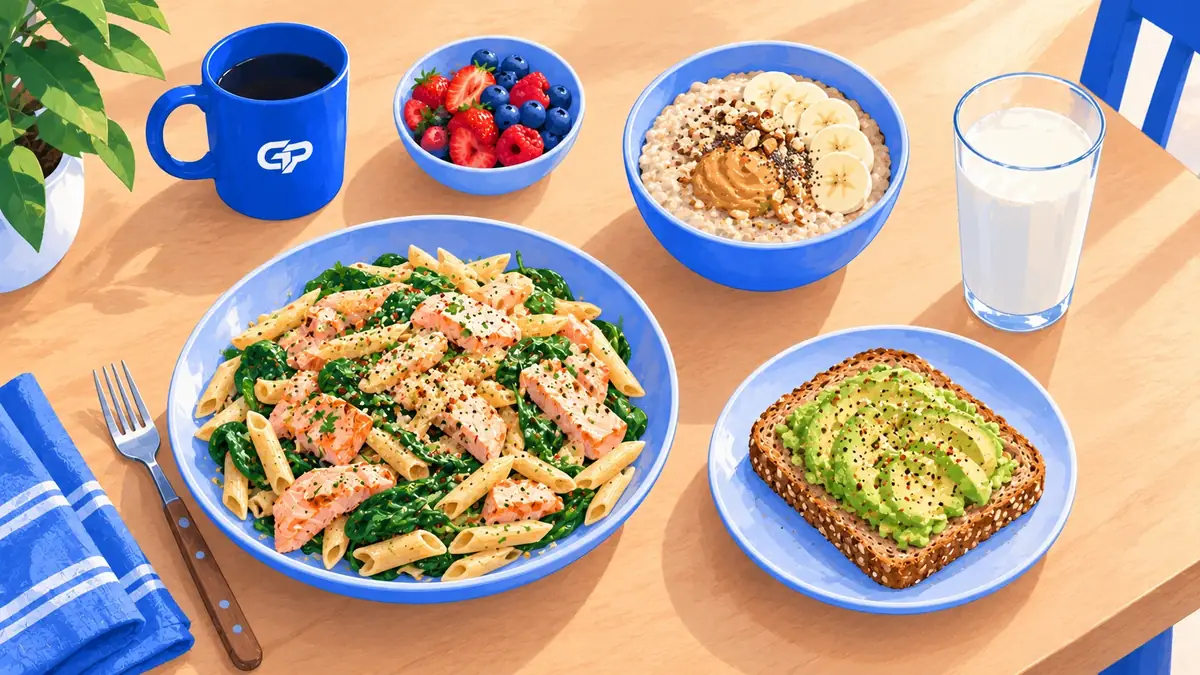
Building mass requires a slight calorie surplus, but not eating anything and everything. The goal is to give the body quality energy and protein to build muscle, while limiting excess fat. Here are simple, effective meal ideas for a clean bulk.
In this guideexpand_more
The structure of a good bulking meal
Each meal should combine three elements: a protein source (meat, fish, eggs, legumes), a complex carb source (rice, whole-grain pasta, potatoes, oats) and vegetables for fiber and micronutrients. Add a source of good fats (olive oil, avocado, nuts).
This structure ensures a filling meal, rich in energy and protein, without excess empty calories. You then simply adjust portions to your needs.
Concrete examples
Breakfast: oats, milk, cottage cheese, fruit and a handful of almonds. Lunch: rice, chicken, roasted vegetables and olive oil. Snack: skyr, banana and peanut butter. Dinner: whole-grain pasta, salmon or lentils, and a salad.
These meals are easy to prepare and endlessly adaptable. The principle stays the same: protein, quality carbs, vegetables, good fats. Cooking ahead keeps you from skipping meals on busy days.
Eating more when appetite is low
If you struggle to eat enough, favor more calorie-dense foods: nuts, avocado, dried fruit, oils, full-fat dairy. Caloric drinks (milk, homemade smoothies) provide energy without filling you up as much as solid meals.
Break meals up more: five or six small meals often go down better than three big ones. Consistency wins — a slight surplus held every day builds muscle over time.
Clean bulk or “dirty bulk”?
The 'dirty bulk', which means eating without limits to gain weight fast, mostly adds fat. Beyond a certain surplus, the body does not build more muscle: the rest goes into fat stores you will have to lose later, often at the cost of some of the muscle gained.
A clean bulk relies on a moderate surplus (200 to 300 kcal) and quality food. You gain muscle a little more slowly, but with far less excess fat — and a much shorter, easier future cut.
Bulking on a small budget
A clean bulk does not require expensive ingredients. The cheapest staples are often the best: eggs, oats, rice, pasta, canned legumes, milk, cottage cheese, bananas and chicken thighs are inexpensive and cover most protein and carb needs.
Buy non-perishables in bulk (rice, pasta, oats, legumes), take advantage of sales on meat and fish to freeze in portions, and favor frozen vegetables, which often cost less than fresh without losing nutritional value. Whey powder, if you use it, is also cheaper per gram of protein than a ready-made shake.
Cooking in large batches once or twice a week (rice, legumes, meat) and splitting into portions saves time and limits waste. A tight budget is therefore not an obstacle to a quality bulk, it just takes a little organization.
Vegetarian or vegan bulking
Bulking without meat or animal products is entirely possible, provided meals are structured carefully. Legumes (lentils, chickpeas, beans), tofu, tempeh, seitan and plant protein powders effectively replace animal sources, as long as you vary sources to cover all essential amino acids.
Since these foods are often less calorie- and protein-dense than meat, you generally need to eat a somewhat larger volume to reach the same calorie surplus. Nuts, olive oil, avocado and whole grains help raise energy density without endlessly multiplying portions.
An example vegan bulking meal: brown rice, marinated and sautéed tofu, broccoli and a spoon of olive oil, topped off with a portion of dried fruit. With a little practice, it becomes easy to build rich, complete and balanced meals without any animal product.
Work out your needs
Frequently asked questions
Do fruits and vegetables have a place when bulking?expand_more
Yes, absolutely, and neglecting them while bulking because they are 'not calorie-dense enough' is actually a common mistake. They provide fiber, vitamins, minerals and antioxidants essential for recovery, proper digestion and overall health, without which your progress eventually suffers over time, even if the number on the scale keeps climbing.
How many meals per day should you eat when bulking?expand_more
There is no magic number: 3, 4 or 5 meals all work, as long as the day's calorie and protein totals are met. Splitting meals more helps mainly those who struggle to eat large volumes at once; conversely, some prefer 3 hearty meals over 6 small ones. Pick the rhythm that lets you hit your targets over time without eating becoming a chore.
Is a mass gainer useful for bulking?expand_more
A gainer is just a blend of carbs, protein and sometimes fat in powder form — handy if you genuinely struggle to eat enough, but not essential. A regular meal or a homemade snack (oats, milk, fruit) often provides the same nutrients for less money and with more fiber and micronutrients.
Should you avoid snacking between meals when bulking?expand_more
No, when bulking, snacking can actually help you reach your calorie surplus, as long as it consists of quality foods (dried fruit, yogurt, cheese, fruit) rather than empty calories. It is even often a simple way to add calories without having to bulk up every main meal.
Do you need to eat 100% clean on a bulk?expand_more
No, the 80/20 rule works well: base your diet on quality foods while leaving room for enjoyment. Too rigid a bulk is hard to maintain. What matters is total calories and enough protein.
How many calories to add to gain mass?expand_more
A moderate surplus of 200 to 300 calories above your maintenance is enough to build muscle while limiting fat. Use the calorie calculator to estimate your maintenance, then adjust based on your weight trend over two to three weeks.
Can you build muscle without gaining fat?expand_more
It is possible for beginners, people returning after a break, or those overweight: this is body recomposition. For most advanced trainees, a slight fat gain accompanies muscle gain. Keep a moderate surplus to limit it as much as possible.
Sources
infoThis content is provided for informational purposes and does not replace the advice of a healthcare professional or dietitian. If you have a specific medical condition, seek advice before changing your diet.
Put this guide into practice
Generate a program matched to your level, log your workouts and track your progress — for free.