
Pull-ups or lat pulldown: which to choose?
5 min read
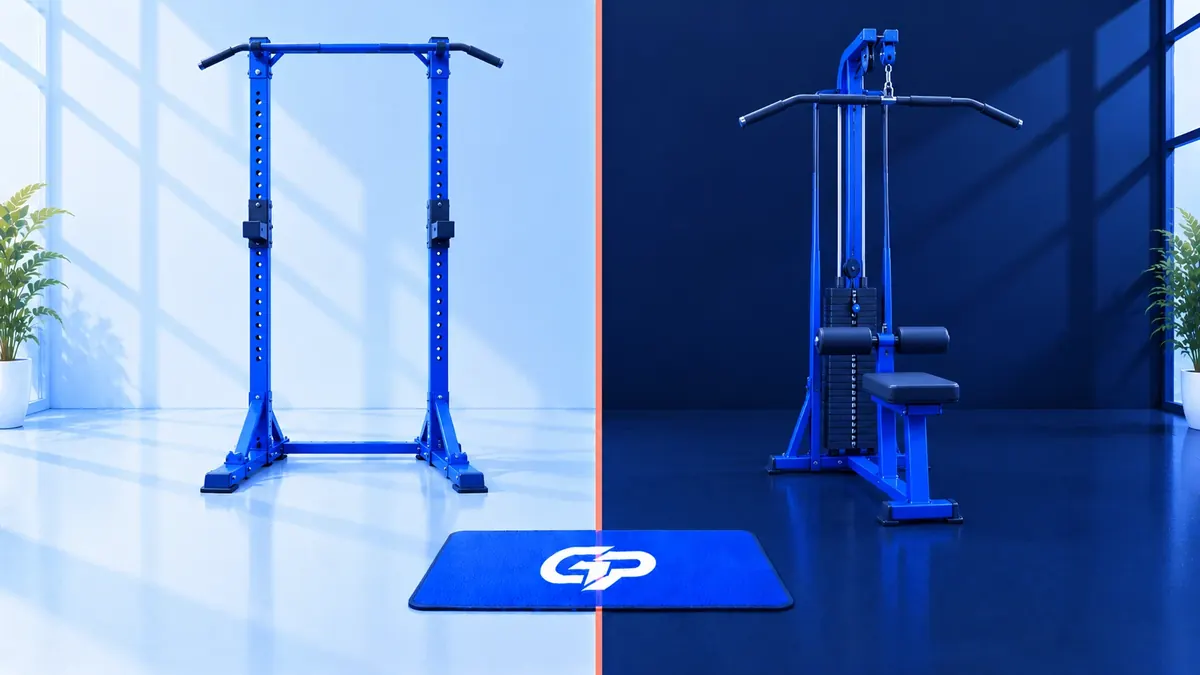
Pull-ups and lat pulldown train back width through a vertical pull. The first is done with body weight, the second on an adjustable-load machine. Which to favor? The answer depends mostly on your current level.
In this guideexpand_more
Pull-ups: the king of back exercises
Pull-ups intensely recruit the lats, arms and core, lifting your entire body weight. It is an extremely effective and rewarding exercise that builds very functional pulling strength for everyday tasks too.
Their difficulty is also their limit: at first, many cannot do a single one. You then need to build strength progressively before you can fully benefit from them.
The lat pulldown: adjustable load
The lat pulldown reproduces the pull-up movement with an adjustable load, from light to heavy. It is perfect for beginners who cannot yet do pull-ups, and for precisely adjusting volume and intensity from one week to the next.
It also lets you vary grips and target the back at the end of a set without being limited by your own strength. In return, it recruits the core a little less than pull-ups, which is a fair trade-off for beginners.
How to combine them
They are not rivals but complementary steps, each suited to a different phase of your progress. If you cannot yet do pull-ups, use the lat pulldown (and assisted pull-ups) to build the necessary strength, then move to pull-ups.
Once you have pull-ups, keep the lat pulldown to add volume, vary grips and work close to failure safely. Both have a place in a good back program, used together rather than as a strict either-or choice.
Varying grips for a complete back
Both pull-ups and pulldowns come in different grips, and each variation slightly shifts the emphasis. A wide pronated grip emphasizes back width and the upper lats; a closer or neutral grip works more on thickness and involves the arms more; the supinated grip (chin-up) strongly recruits the biceps.
Rather than hunting for THE best grip, rotate them over the weeks. This variety works the back from several angles and prevents imbalances, for a back that is both wide and thick.
Frequency and volume for the back
To develop the back effectively, aim for 10 to 16 weekly sets combining vertical and horizontal pulls. Pull-ups, more demanding, work well over 2-3 sessions per week with a variable rep count; the lat pulldown, easier to dose, can be pushed closer to failure more often.
If you can only do a few pull-ups, prioritize quality (full range, no swinging) over quantity, and complement with lat pulldowns to accumulate volume without exhausting yourself on an exercise that is still hard for you.
Protecting the shoulders on vertical pulls
Pull-ups and the lat pulldown strongly stress the shoulder, especially if the path is poorly controlled or you pull behind the neck. Favor a pull to the front, toward the collarbone or upper chest, rather than behind the head, which puts the shoulder in a risky position for little extra benefit.
Warm up the shoulders well before an intense back session (rotations, resistance bands), and stop the movement if you feel joint pain rather than simple muscle fatigue. These precautions apply equally to pull-ups and the lat pulldown.
Frequently asked questions
Does the pulldown build as much as pull-ups?expand_more
At equivalent intensity and volume, both develop the back very well. Pull-ups have a slight edge for functional strength and bracing, but the pulldown allows finer load adjustment. Combining them is ideal.
Which to start with as a beginner?expand_more
Start with the lat pulldown and assisted pull-ups to build strength, then add negative pull-ups. As you progress, you will reach your first full pull-up. See our dedicated guide 'Getting your first pull-up'.
Wide or close grip for the back?expand_more
A wide grip emphasizes width and the upper back a bit more; a close or neutral grip works thickness and the arms more. Neither is superior: varying grips over the weeks builds a more complete back.
Are assisted pull-ups useful?expand_more
Yes, very much so: an assistance machine or band reduces the load to lift while faithfully reproducing the pull-up movement. It is one of the best tools for progressing toward your first full pull-up, letting you dial the assistance down gradually as you get stronger.
Does the lat pulldown work the biceps?expand_more
Yes, like supinated-grip pull-ups, the lat pulldown recruits the biceps in synergy with the back, especially with a close or supinated grip. It is a useful bonus, but the back remains the main driver of the movement.
How long does it take to get your first pull-up?expand_more
It varies a lot depending on your starting point, often from a few weeks to a few months of regular training. Our dedicated guide 'Getting your first pull-up' details a full progression, from lat pulldowns to negative pull-ups.
Does the lat pulldown damage the shoulders long-term?expand_more
Not if performed well: pull to the front rather than behind the neck, control the load and avoid jerking. Used with good technique, it is a safe exercise long-term, just like pull-ups.
Can you do pull-ups every day?expand_more
It is not recommended: the back and arms need recovery between intense sessions. Two to four sessions per week, alternating pull-ups and lat pulldowns, are more than enough to progress without overtraining or risking an overuse injury.
Is horizontal pulling (rowing) as important as vertical pulling?expand_more
Yes, absolutely: rowing (horizontal pulling) mainly works back thickness and the mid-back, complementing the width built by pull-ups and the lat pulldown. A complete back program always combines both pulling directions for balanced development and a stronger, more resilient posture over time.
Does grip fatigue before the back does?expand_more
In beginners, yes, this is common: the forearms give out before the back is truly fatigued. Lifting straps can help temporarily, but building grip strength with dead hangs from the bar remains the lasting solution, and it carries over to deadlifts and rows as a welcome side benefit.
Put this guide into practice
Generate a program matched to your level, log your workouts and track your progress — for free.